

How to Make Videos for Social Media: The Practical Guide
How to make short-form video that works on TikTok, Reels, Shorts, and LinkedIn — hooks, lengths, aspect ratios, captions, and a repeatable weekly process.
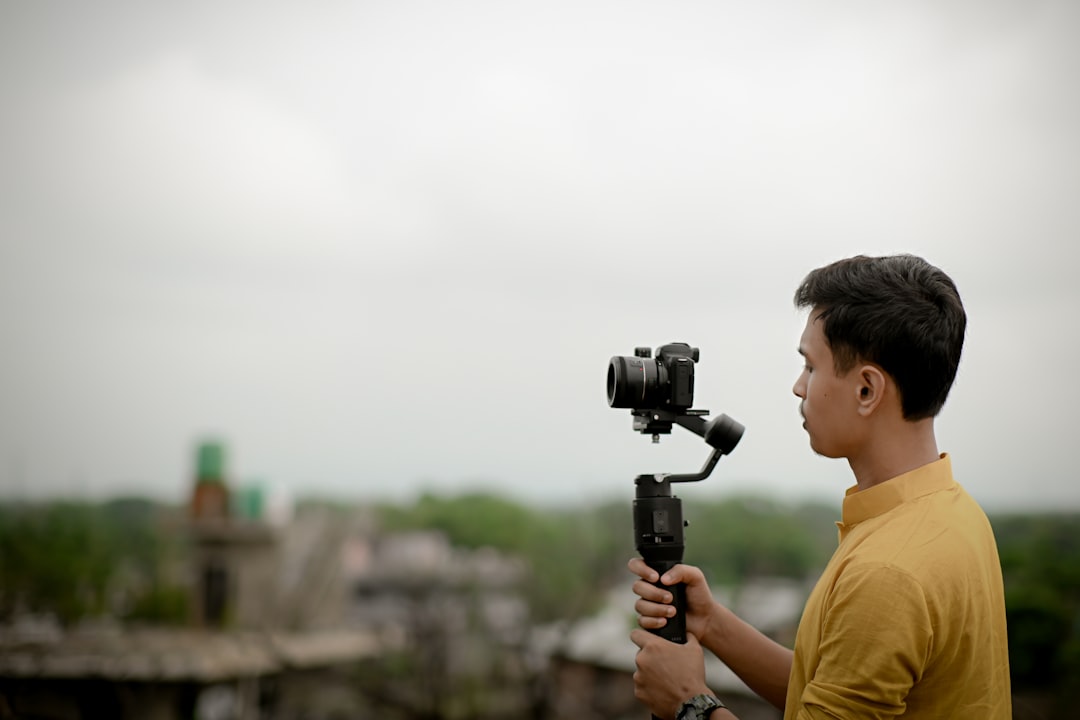
_Photo by Shiv Narayan Das on Unsplash_
Social video is not shorter television. It runs on a different mechanic: a feed where the viewer did not choose you, is not committed to you, and will leave in under three seconds if nothing holds them. Everything that makes social video work follows from that one fact.
This guide covers what actually moves the needle — the hook, the length, the format, the captions — and then a weekly process you can repeat without it eating your job. If you have never made any video at all, start with how to make a video and come back. Storytime turns one recorded take into the platform-specific cuts this guide describes.
Key takeaways:
- The first three seconds decide the outcome of the entire video. Everything else is downstream.
- Vertical 9:16 is the default. Repurposing a horizontal video by adding bars is visibly lazy and performs like it.
- Captions are not accessibility polish — most viewers have the sound off, so uncaptioned video is silent video.
- One recording should produce several posts. Making one video per post is the reason people burn out by week three.
- Consistency compounds; brilliance does not. A predictable weekly rhythm beats sporadic excellence.
The hook is most of the job
On a feed, you are not competing with other videos about your topic. You are competing with a thumb. Platform data has been consistent on this for years: the majority of drop-off happens in the first three to five seconds.
What works in those seconds:
- A claim with an edge. "Most onboarding emails are actively losing you customers."
- A specific number. "We cut our churn by 40% by deleting a feature."
- A named mistake. "If your pricing page has three tiers, you probably picked them wrong."
- A direct address to one person. "If you are a freelancer who just raised your rates and lost a client, this is for you."
- Introducing yourself. Nobody has agreed to care who you are yet.
- "In this video I'm going to..." — this is a table of contents for a video they have not decided to watch.
- Slow scene-setting. A wide establishing shot is television grammar.
- A logo animation. Never.
Match the format to the platform
The same idea should be cut differently per surface. This is not busywork — the platforms genuinely reward different things.
| Platform | Aspect ratio | Sweet spot | What it rewards |
| --- | --- | --- | --- |
| TikTok | 9:16 | 21–45s | Fast hooks, personality, native trends |
| Instagram Reels | 9:16 | 15–40s | Visual polish, rewatchability, saves |
| YouTube Shorts | 9:16 | 30–60s | Clear single payoff, loop-friendly ends |
| YouTube (long) | 16:9 | 6–12 min | Depth, searchable titles, retention curve |
| LinkedIn | 9:16 or 1:1 | 45–90s | Professional specificity, a real opinion |
| X / Twitter | 16:9 or 1:1 | 20–45s | Immediacy, quotable single line |
Two rules that hold everywhere:
Never post a horizontal video with black bars to a vertical feed. It reads as recycled and the platforms measurably deprioritise it.
Shoot with the crop in mind. If you record 16:9 knowing you will also cut a vertical version, keep yourself and any on-screen text inside the middle third of the frame.
Captions are mandatory
Estimates for sound-off viewing on social feeds run from 60% to 85% depending on platform and time of day. Either end of that range means the same thing: if your video is uncaptioned, most of your audience is watching a silent film of someone talking.
What good captions look like:
- Burned in, not platform auto-captions. Auto-captions are inconsistent, small, and sometimes not shown at all.
- A few words at a time, not a full paragraph block.
- High contrast, positioned clear of the platform's own UI — keep them out of the bottom quarter where the caption text and buttons live.
- Accurate. Auto-transcription is good now, but it mangles names, jargon, and numbers. Those are exactly the words that matter. Read them once.
Make one recording produce several posts
This is the difference between a sustainable practice and quitting in month two. Doing "one recording per post" means the number of posts you can make is capped by how many times you are willing to set up a camera.
Instead, record in blocks around a theme. In a single 30-minute session:
That is one setup and six posts. Then the main piece yields more: a strong 30-second section becomes its own short, the best sentence becomes a quote card, and the transcript becomes a written post.
The constraint is not ideas. It is setups.
A weekly process that survives a busy week
Here is a rhythm that works for people with an actual job:
Monday — decide (15 min). Pick this week's theme and write down the questions you will answer. Not scripts, just questions. Pull them from client conversations, comments, or your inbox.
Tuesday — script (30 min). Write the hooks. If nothing else is done well this week, make the hooks good. Draft the rest loosely.
Wednesday — record (30 min). One session, everything at once. Use a teleprompter so you are reading rather than remembering. Do not restart from the top when you fumble — repeat the sentence and move on.
Thursday — finish (20 min). Cuts, captions, aspect ratios, thumbnails.
Friday — schedule (10 min). Queue the week ahead. Then stop thinking about it.
Under two hours a week, and the parts that need your brain (Monday, Tuesday) are separate from the parts that need your face (Wednesday) and the parts that need neither (Thursday, Friday). That separation is what lets you do it on a bad week.
What to do when a video flops
Most videos underperform. This is the normal shape of the medium, not a signal that you are bad at it. Before you change your whole approach, check the diagnosis:
- Very low view count, most viewers leaving in 1–3 seconds: the hook failed. The rest of the video was never seen and is not the problem.
- Decent views, steep drop at 10–15 seconds: the hook wrote a cheque the body did not cash. You promised something you then took too long to deliver.
- Good retention, low engagement: it was clear but had no edge. Nobody argues with, saves, or shares a video they simply agreed with.
- Good everything, no business result: the content is working and the call to action is not, or the topic attracts an audience that will never buy.
Common mistakes
Making it about you. "Excited to share..." is a post about the poster. Lead with what the viewer gets.
Over-editing. Beginners discover jump cuts and zooms and apply all of them. Fast editing cannot rescue a weak point; it just makes a weak point noisy.
Chasing every trend. Trends are a distribution tactic with a two-week shelf life. If the trend has nothing to do with what you know, the views it brings are worth very little.
Posting and vanishing. Most platforms weight early engagement heavily. Being present to reply for the first hour materially affects reach.
Waiting for a good setup. The account you would start in six months with better gear will be six months behind the account you start today.
Related reading
- How to make a video — the fundamentals, if this is your first one.
- What to post on social media — for when the process is fine but the ideas are not.
- How to record yourself on camera — the delivery side.
Frequently Asked Questions
How long should a social media video be?
It depends on the platform, but the sweet spots are fairly stable: 21–45 seconds on TikTok, 15–40 seconds for Instagram Reels, 30–60 seconds for YouTube Shorts, 45–90 seconds on LinkedIn, and 6–12 minutes for standard YouTube. The underlying principle matters more than the numbers: stop when the point is finished. Retention rate, not duration, is what the algorithms actually read, and a tight 25-second video with 90% completion outperforms a padded 60-second one with 40%.
What is the best aspect ratio for social media video?
Vertical 9:16 (1080x1920) is the default for TikTok, Instagram Reels, YouTube Shorts, and increasingly LinkedIn. Use 16:9 for standard YouTube and for video embedded on your own website. Square 1:1 is a reasonable compromise for LinkedIn and X feeds. Never post a 16:9 video with black bars into a vertical feed — it looks recycled and the platforms deprioritise it. Record once and export the ratios you need rather than filming separately for each.
Do I need captions on social media videos?
Yes. Between 60% and 85% of social video is watched with the sound off depending on the platform, so an uncaptioned video is a silent video for most of its audience. Burn the captions into the video rather than relying on platform auto-captions, which are inconsistently displayed and often too small. Keep them out of the bottom quarter of the frame where the platform's own interface sits, and proofread names, numbers, and jargon, which automatic transcription reliably gets wrong.
How often should I post videos on social media?
Post at a cadence you can hold on your worst week. For most people starting out that is two to three times a week, not daily. Consistency over six months matters far more than volume over three weeks, because the platforms reward accounts that reliably produce watchable content and because you improve through reps rather than through intensity. Batch-recording several videos in one session is how most consistent posters actually sustain their cadence.
What makes a good hook for a short video?
A good hook states something specific and slightly surprising within the first three seconds, before any introduction. Strong patterns: a claim with an edge ("most onboarding emails lose you customers"), a concrete number ("we cut churn 40% by deleting a feature"), a named mistake, or a direct address to one type of person. Weak patterns: introducing yourself, saying "in this video I'm going to," slow scene-setting, or a logo animation. Test yours by deleting the first sentence — if what remains is stronger, cut it.
Can I use the same video on TikTok, Instagram, and YouTube?
You can post the same recording, but you should cut it differently for each. Same source footage, different edit: TikTok tolerates rougher and faster, Reels rewards polish and rewatchability, Shorts wants a clean single payoff and an end that loops. Also strip platform watermarks — posting a video with a visible TikTok watermark to Reels is a well-documented way to get deprioritised. Re-exporting from the original rather than downloading from another platform solves this.
How do I make social media videos if I have no editing skills?
Use tools that perform the standard short-form edit automatically: trimming dead air, removing filler words, generating and burning in captions, and exporting each aspect ratio. This covers the great majority of what a talking-head social video needs. Learning a manual timeline editor is worthwhile eventually if you want a distinctive visual style, but it is not a prerequisite for publishing, and treating it as one is the most common reason people never start.
How many videos can I get from one recording session?
Realistically six to ten posts from a single 30-minute session if you plan for it. Record one longer main piece plus three or four standalone short answers on the same theme, then harvest clips from the main piece. The bottleneck in social video is not ideas — it is the number of times you are willing to set up and get on camera, so the highest-leverage change most people can make is recording in batches rather than one video at a time.
Why is my video getting no views?
Almost always the hook. If most viewers leave in the first three seconds, they never saw the rest of the video, so nothing after second three can be the cause. Look at your retention graph before changing anything else: a cliff in the first seconds means rewrite the opening, a drop at ten to fifteen seconds means the body did not deliver what the hook promised, and flat retention with low engagement means the content was clear but had no point of view worth reacting to.
Should I show my face in social media videos?
It helps but it is not required. Face-to-camera builds recognition and trust faster than any other format, which matters most if you are selling expertise or building a personal brand. That said, voiceover over screen recordings, b-roll, or text-on-screen performs strongly in tutorials, finance, and listicle categories. If you avoid your face purely out of discomfort, note that the discomfort reliably fades around the fifth or sixth video, which is an argument for making them quickly.